
A well set up four-wheel drive is the most reliable way to reach 14 Mile with less stress and fewer surprises. A two-wheel drive setup can work when conditions stay firm and predictable, but the margin for error is smaller, and small mistakes can turn into real trouble fast.
14 Mile Beach is the kind of track that looks easy until it is not. The difference between arriving relaxed and getting stuck usually comes down to traction, tyre setup, and how much margin your vehicle has when the surface softens.
This guide is a reality check on 2WD vs 4WD setups for 14 Mile, including what actually works, what fails most often, and the gear that saves you when conditions change. At Ningaloo Reef Station we help travellers plan access based on their vehicle, load, towing plans, and the day’s conditions, so you can choose the right tool before you commit.
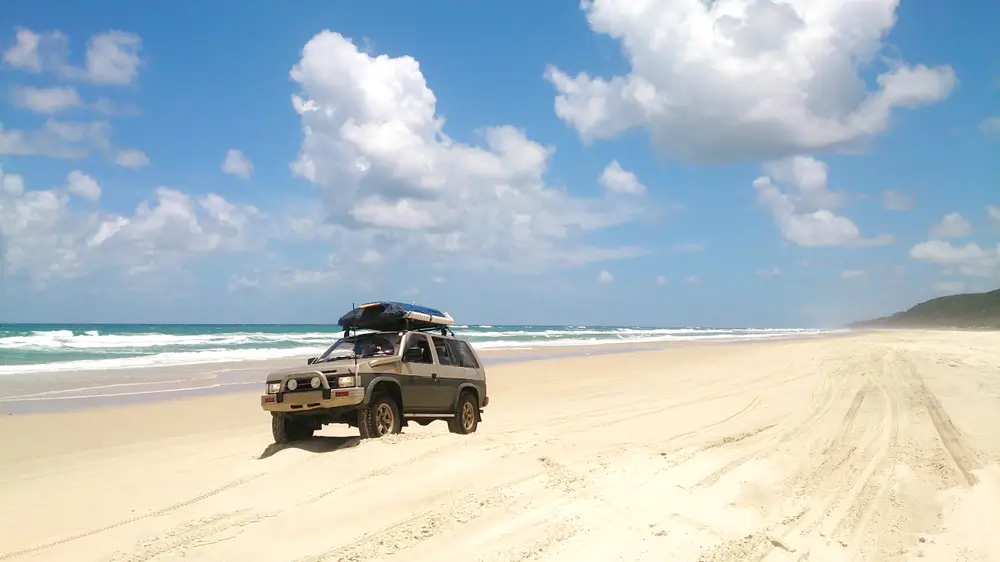
Can You Drive To 14 Mile with A 2WD Vehicle?
Yes, you can sometimes drive to 14 Mile with a 2WD vehicle, but it depends on traction, clearance, weight, and your driving technique. The most common problems with two wheel drive vehicles in remote off road conditions come down to limited traction when the surface becomes soft, chopped up, muddy, or slippery compared to four wheel drive.
A 2WD vehicle sends power to one axle, not to all four wheels. In many cars, 2WD means power to the front axle (front wheels). In many trucks and utes, 2WD means power to the rear axle (rear wheels). Either way, if one driven wheel loses grip, an open differential can send most of the power to one tire, and you stop making forward progress.
A 2WD setup is most likely to work at 14 Mile when you can drive smoothly at low effort and avoid wheelspin. That usually looks like this:
- Drive on a firm surface with consistent traction, not powdery sand
- Carry a light load, with weight kept low and balanced
- Maintain steady throttle and smooth steering
- Plan a turn back point before you commit to the soft sections
- Bring recovery basics so a small bog does not become a long job
A 2WD setup is least likely to work when you need high speed or momentum to feel safe. High speed increases risk on corrugations, reduces control on the edge of ruts, and can damage tyres, suspension, or the underbody.
Personally, if you are unsure and it is your first time, choose the option that reduces risk, not the option that tests your luck.
Do You Need 4WD To Reach 14 Mile Trail?
You do not always need 4WD to reach 14 Mile Trail, but 4WD is the setup that works most consistently when traction drops. Four-wheel drive provides more traction and better traction because it can deliver torque to more wheels when the surface becomes soft, uneven, or slippery.
4WD systems are also built to support off road driving in a way most 2WD systems are not. Many 4WD vehicles have:
- A transfer case that enables 4WD modes and often low range
- Higher ground clearance and more robust underbody protection, depending on the model
- Suspension and drivetrain components designed to handle off road loads
- More extensive aftermarket support for off road upgrades than 2WD platforms
It is also worth saying out loud: 4WD is inherently better off road compared to 2WD, even when a skilled driver can make 2WD work in the right hands. Skill matters, but drivetrain capability sets the limits.
A common sentiment among experienced off roaders is that the need for 4WD is often exaggerated on easy tracks, and that good technique can compensate in many situations. That can be true. At the same time, many users also argue that 4WD can provide a false sense of security for novice drivers, especially if they drive too fast or ignore tyre pressure.
The practical takeaway is simple:
- 4WD gives you capability and control when conditions get worse.
- 2WD demands better planning, lighter weight, and cleaner technique to avoid getting stuck.
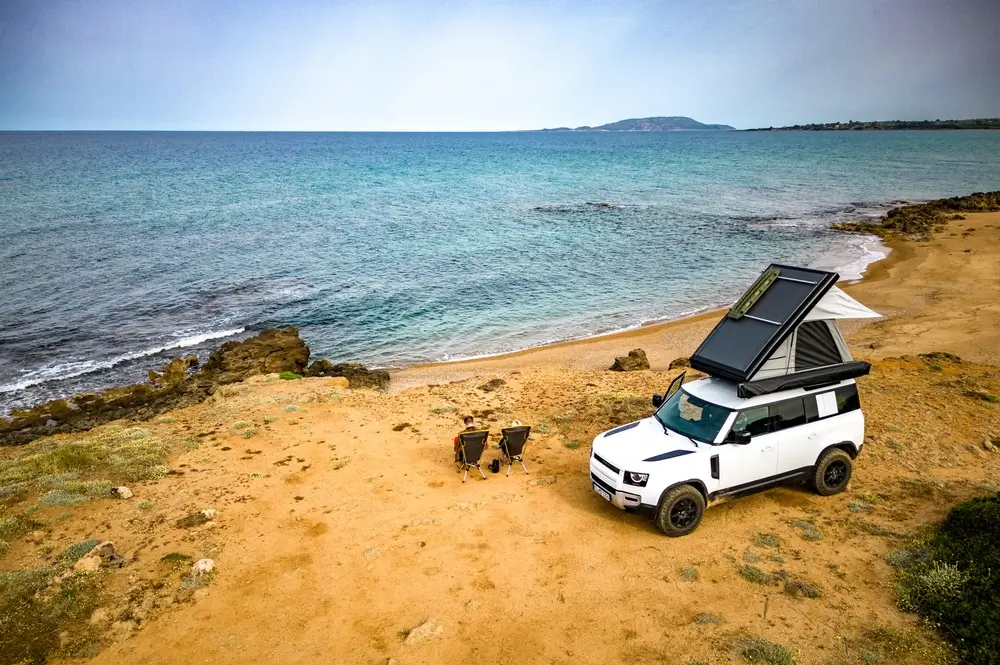
What Is the Road Condition Like On 14 Mile?
The road condition at 14 Mile can change quickly, and the same line can be firm one day and soft the next. Wind, rain, traffic, and track maintenance all influence how much traction you have, how deep ruts become, and how easy it is to keep moving without wheelspin.
Instead of trying to guess a single description, use this condition framework. It helps you match your setup to what is actually happening under your tyres.
Firm And Dry Conditions
Firm and dry conditions are where 2WD has the best chance of success. The surface supports the tyre, the track holds shape, and you can drive without relying on speed.
Typical signs include:
- A compact surface that does not crumble under foot
- Shallow tyre marks that do not deepen quickly
- Predictable steering with minimal sliding
In these conditions, a well driven 2WD can often travel without drama, especially if weight is light and tyre pressures are appropriate for the surface.
Soft And Loose Conditions
Soft and loose conditions are where 4WD becomes the sensible choice. When the top layer becomes powdery, tyres sink, and traction becomes inconsistent. This is when 2WD vehicles most often get stuck.
Typical signs include:
- Deepening ruts from repeated wheelspin
- Loose, churned sand in corners or on the inside of tracks
- A feeling that the vehicle is floating rather than gripping
If you are in a 2WD and you feel traction drop, the best move is usually to slow down, reassess your line, and reduce wheelspin. Pushing harder often makes the problem worse.
Corrugated Conditions
Corrugations reduce control and increase mechanical load on the vehicle. Corrugations can also loosen gear, shift weight, and stress your suspension setup.
Typical signs include:
- Vibration that makes it hard to hold a smooth throttle
- Tyres skipping slightly across the surface
- Increased fatigue for the driver over short distances
Corrugations are where a calm pace and good packing discipline matter. Secure loads, slow down, and choose a clean line rather than trying to race the track.
Rutted And Uneven Conditions
Rutted sections turn clearance into a deciding factor. A vehicle can have enough power and still fail if the underbody bottoms out or if you cannot keep the wheels on a stable line.
Typical signs include:
- Two deep grooves pulling your wheels off the ideal path
- Sharp dips or washouts that hit the chassis
- Loose edges that collapse if you drive too close to the side
When ruts are deep, you need to consider wheel placement, approach angle, departure angle, and what is happening under the rear, not just what you see through the windscreen.
Is 14 Mile Road Paved or Dirt?
14 Mile access is not a sealed highway drive, so plan for unsealed dirt track conditions. Unsealed surfaces change how traction works, how braking feels, and how quickly the track can degrade once tyres start spinning.
If you are used to city driving, treat this like a different system of rules:
- Brake earlier because loose surfaces increase stopping distance
- Steer smoothly because sudden inputs reduce traction
- Accelerate gently because wheelspin digs the surface out
This is also where your setup choice affects comfort. 4WD vehicles often have stronger suspension components and more appropriate tyres for off road use, while 2WD commuter cars are built primarily for sealed roads and fuel efficient daily driving.
What Kind of Terrain Is 14 Mile?
14 Mile terrain is best treated as mixed off road terrain, not a single consistent surface. You can encounter sections that feel easy, then a short patch that demands traction, clearance, or both.
Common terrain elements include:
- Soft sand patches, such as churned sections, dune edges, or loose corners
- Ruts and washouts, such as grooves and dips that catch low underbodies
- Corrugations, such as ripples that stress tyres, wheels, and suspension
- Loose shoulders, such as edges that collapse if you drift off the main line
This is not rock crawling in the traditional sense, and it is not a racing course. The goal is smooth, controlled travel that keeps your tyres floating rather than digging.
If you are towing to a nearby boat ramp or hauling gear for fishing, terrain variability matters even more because extra weight reduces traction and increases the chance of getting stuck when you stop and restart.
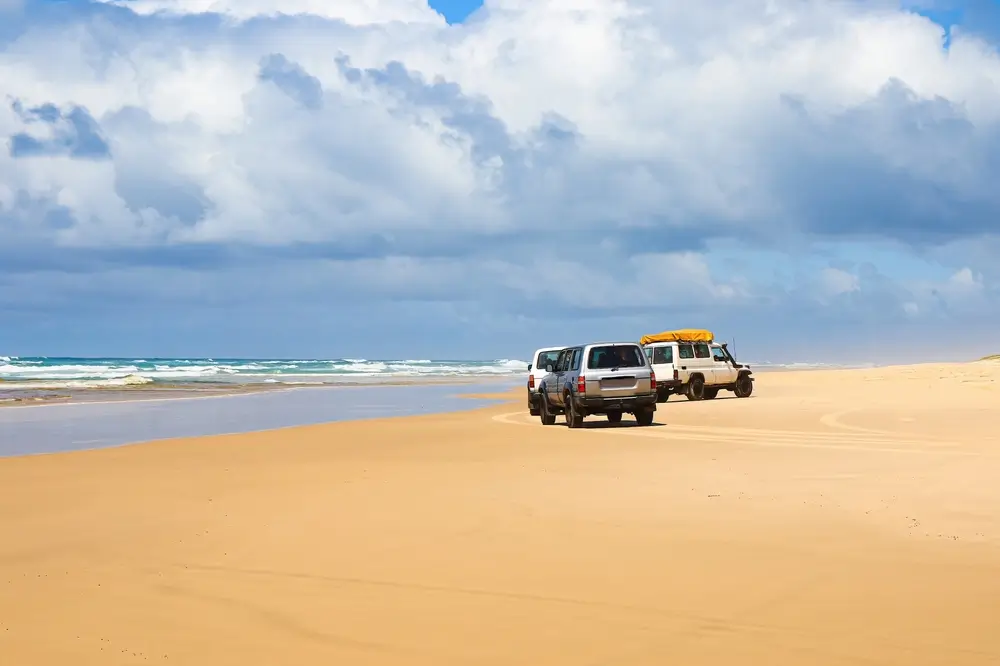
Are There Any Water Crossings On The Way To 14 Mile?
Do not assume water crossings are absent or safe, because conditions can change after rain and runoff. Even shallow water can hide soft sand, deep holes, and unstable exits.
If you encounter water on the track, use this sequence:
- Stop and assess the entry and exit line
- Check the firmness of the exit, because many boggings happen on the way out
- Avoid crossing if you cannot confirm depth and base condition
- Turn back if you are solo and unsure
4WD systems are beneficial for enhanced grip, stability, and control in low traction conditions such as mud, wet sand, and deep snow. You will not get snow at Ningaloo, but the principle applies to any low traction surface: more controlled traction reduces risk.
2WD Vs 4WD: The Difference That Matters On This Track
The core difference is how each drivetrain behaves when traction drops at low speed. 4WD can distribute torque across four wheels and often uses low range to multiply torque at controlled speeds. 2WD drives only one axle, and it usually needs more momentum when the surface softens.
Here is the practical comparison that matters:
- 4WD delivers torque across more wheels, which improves traction when one wheel slips
- 4WD low range reduces wheelspin, because you can move slowly with controlled power
- 2WD relies on a cleaner line and momentum, which increases wheelspin risk in soft sand
- 2WD open differentials can spin one tyre, which stops forward progress
It is worth acknowledging the trade-offs, because people often compare these drivetrains for a broader reason than one trip to 14 Mile.
Fuel Economy And Running Costs
2WD is usually more fuel efficient than 4WD because it is lighter and has less mechanical resistance. The additional weight of 4WD systems increases engine load, and running 4WD Auto can negatively affect fuel economy even if it does not engage all four wheels.
As a rough guide for daily driving, many drivers find the fuel economy gap is noticeable but not life changing. For a typical short commute, the annual fuel cost difference between 2WD and 4WD is often estimated at under about $10 per month for many drivers, depending on the vehicle, the tyres, and how many kilometres you drive.
Complexity And Maintenance Costs
4WD systems are generally more complex and have more parts that can fail compared to 2WD systems. A transfer case, extra driveline components, and additional moving parts mean there is more to inspect and maintain.
2WD vehicles are generally less expensive to purchase and maintain than 4WD vehicles, and they often have fewer mechanical issues related to driveline complexity. That said, tyres, suspension, and alignment still matter for both.
Resale And Aftermarket Support
Many 4WD platforms have higher resale and stronger aftermarket support for touring and off road upgrades. Aftermarket support for 2WD vehicles is generally less extensive than for 4WD vehicles, particularly for serious traction and underbody upgrades.
If you are buying a new rig for mixed use, it comes down to what you need the vehicle to do:
- If your job and life are mostly highway and town driving, 2WD is often the more fuel efficient and affordable choice.
- If you regularly drive dirt, sand, tow a trailer, or travel in rain and low traction conditions, 4WD gives you more capability and more margin.
Minimum Setup That Works For 2WD
A 2WD setup that works at 14 Mile is a higher clearance vehicle, with the right tyres, the right technique, and a plan to turn back early. 2WD can perform well off road with the right techniques and equipment, including appropriate tyres and, in some cases, traction upgrades.
Start with the non negotiables that do the most work.
Tyres And Traction
Tyres play a crucial role in the performance of both 2WD and 4WD vehicles, especially off road. If you change nothing else, improve tyres and tyre management first.
A practical 2WD baseline:
- Choose tyres with solid tread depth and tougher construction than worn highway tyres
- Reduce tyre pressure when the surface becomes soft, then reinflate for highway speeds
- Carry a gauge and compressor so you are not guessing
Differentials And Traction Aids
Locking differentials can significantly enhance the off road capability of 2WD vehicles. A rear locking differential helps because it reduces the “one tyre spin” problem when one wheel loses traction.
2WD vehicles can be modified for off road use with the right components, such as tyres and differentials. This is common in 2WD trucks where owners want a simpler driveline but better traction for sand and dirt. Many users also believe 2WD trucks can be fun to drive and capable in certain terrains if handled properly.
Suspension And Clearance
Suspension setup and clearance decide whether you can follow the track line without scraping. Clearance matters when ruts deepen or the centre line rises.
A practical baseline:
- Avoid low clearance cars on uneven sections
- Keep weight balanced so the rear does not sag and reduce clearance
- Check tyres, spare, and tools before you leave
A Practical 2WD Mindset
Some users feel that the need for 4WD is exaggerated, and that skill can compensate in many situations. That only holds if you drive like a planner, not like a pusher.
Use this approach:
- Pick the cleanest line, even if it is slower
- Stop early on firm ground, not in the soft patch
- Turn back before you dig in, not after you get stuck
Minimum Setup That Works For 4WD
A basic 4WD setup is enough for 14 Mile if you use it correctly, especially with low range and sensible tyre pressures. You do not need extreme mods, but you do need the fundamentals.
Drivetrain Capability
Key features that matter:
- Low range for slow, controlled torque
- A capable transfer case and driveline in good condition
- Traction aids where available, such as locking differentials
A note on modes and speed: full time 4WD, AWD, and many modern 4WD Auto systems are designed to run on mixed surfaces at normal speeds. Part time 4WD systems that lock the centre should only be used on loose surfaces. If you are not sure, follow your vehicle handbook.
Traction And Tyres
The rules still apply:
- Lower pressures on soft sand
- Drive smoothly to avoid wheelspin
- Reinflate before higher speed highway driving
Clearance And Protection
Many 4WD vehicles are built with higher ground clearance, which protects the undercarriage from obstacles on rough tracks. This is one reason 4WD wagons and trucks often cope better when ruts and washouts appear.
Complexity And Maintenance
Because 4WD systems are more complex, basic maintenance matters:
- Inspect CV boots, driveline components, and fluids
- Maintain tyres and alignment
- Check recovery points and gear before a remote trip
This is where the “only advantage” argument can mislead. The only advantage of 2WD is not just fuel economy. Simplicity can reduce maintenance issues. But on a track that demands traction, 4WD advantage is capability and control.
The 5 Mistakes That Get People Stuck
Most people get stuck because of a small decision that compounds, not because the track is impossible. Avoid these five mistakes and you reduce your bogging risk a lot.
- Drive on road tyre pressure in soft sand, which reduces footprint and increases digging
- Push the throttle when traction drops, which creates wheelspin and holes
- Stop in the softest section, which makes restarting much harder
- Load weight too far rear, which reduces steering control and increases rear digging
- Arrive without recovery basics, which turns a 10 minute fix into a long job
If you do get stuck, focus on calm, mechanical steps, not ego:
- Air down further if safe for your tyres
- Dig the sand away from tyres and under the diff or axle line
- Place traction boards and pull forward gently
- Avoid spinning wheels, because that makes the hole deeper
This is where driving skill plays a significant role in the effectiveness of 2WD vehicles off road, and it also matters in 4WD. Good technique reduces recovery events for everyone.
Decision Checklist: Choose Your Setup In 60 Seconds
Use this checklist to decide if you should drive 14 Mile in 2WD, 4WD, or change the plan. If you are unsure, choose the setup with the larger safety margin.
Choose 4WD If Any Of These Are True
- Expect soft sand on any section of the track
- See deep ruts or washouts that threaten clearance
- Tow a trailer, boat, or extra load
- Carry heavy weight, such as jerry cans, full eskies, or a canopy load
- Travel solo without a second vehicle
- Drive in rain or after rain where mud and soft patches appear
- Need higher stability in low traction conditions
4WD offers better stability and traction in adverse weather conditions compared to 2WD. That is especially true in mud and snow. Snow is not a Ningaloo issue, but wet sand and rain affected sections can behave similarly from a traction point of view.
Consider 2WD Only If All Of These Are True
- Confirm the surface is firm and consistent for the route you plan
- Have adequate clearance for visible ruts and dips
- Carry recovery gear, including a shovel, boards, gauge, and compressor
- Plan a clear turn back point before the soft sections
- Drive in daylight with time buffer and calm pace
Some users believe 2WD can be just as capable as 4WD in the right hands, especially with planning and technique. That is true in certain terrain and conditions. It is not true when the surface is soft and you have no traction margin.
Recommended Gear List For 14 Mile Style Access
Pack the gear that prevents a simple bog from becoming a long recovery, then build from there. This list applies to 2WD, AWD cars, and 4WD vehicles.
Tyre And Traction Gear
- Tyre pressure gauge
- Portable air compressor
- Shovel with a long handle
- Traction boards (two boards minimum)
- Tyre repair kit and a usable spare
Recovery And Safety Gear
- Rated recovery points on 4WD vehicles
- Recovery strap and rated hardware if you understand safe recovery technique
- First aid kit
- Water with a realistic buffer for heat and delays
- Communication option if you travel beyond reliable coverage
Towing And Load Security Gear
If you tow a boat, trailer, or haul heavy gear:
- Tie down straps to stop load shift on corrugations
- Trailer coupling check and safety chain inspection
- Weight distribution check so the rear does not sag
- Spare trailer wheel if you are remote
Weight and load security are not optional off road. A shifting load changes handling increases suspension stress and can create a recovery situation fast.
Conclusion
The difference between a smooth trip and a recovery job usually comes down to traction, tyre management, weight, and technique. Four-wheel drive gives you more traction, more control, and a bigger safety margin when the track softens or ruts deepen. Two-wheel drive can work when conditions are firm, your setup is light and sensible, and you plan a clear turn back point before you commit.
Ready To Choose the Right Setup For 14 Mile? Contact Ningaloo Reef Station for current access advice based on your vehicle, your load, and the conditions, then book your stay so you can spend your time on the reef instead of on the track dealing with trouble.
Frequently Asked Questions
Yes, but only when the surface is firm and your setup supports traction and clearance. If you rely on pushing speed to get through, you increase the chance of getting stuck.
Yes, it is accessible by vehicle, but not every car setup is suitable. Higher clearance vehicles cope better, and 4WD gives the most consistent off-road capability when conditions change.
Road condition varies with rain, traffic, and track wear. Expect mixed terrain, including sand, corrugations, and ruts.
4WD is not always mandatory, but it is the most reliable option. It offers more traction and better control in low grip conditions.
It is unsealed dirt track access, not a paved highway. Drive slower, brake earlier, and manage tyre pressure if the surface becomes soft.
Terrain can include sand patches, corrugations, ruts, and uneven edges. It is not rock crawling, but it can still stop a low clearance vehicle quickly.
The best off road option depends on your vehicle, your experience, and current track conditions. The right plan is the one that matches your setup, not the one that sounds toughest.
It is remote enough that you should plan for delays and self-recovery. Carry water, basic recovery gear, and a reliable way to call for help.
A high clearance 4WD truck or wagon with low range is the most versatile choice. AWD cars can perform well on firm dirt, but they still have limits in deep sand and mud.
Do not assume water crossings are safe, especially after rain. If you cannot confirm depth and the firmness of the exit, turn back.
Want to Stay at Ningaloo station?
Use our Travel Calculator
More Locations
Check out the rest of the Locations available

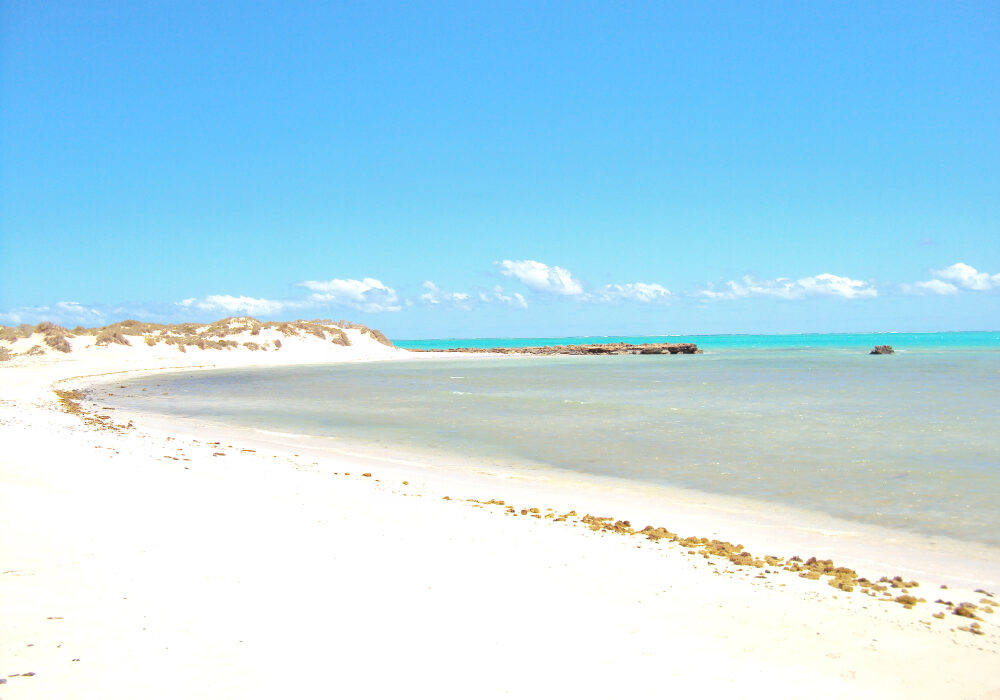
14 Mile Beach Camp
14 Mile Beach Camp is a remote, off-grid beachfront campground near Coral Bay with white sand, turquoise water, big skies and epic sunsets.
It’s dog-friendly (on lead) and well-priced, but you need to arrive prepared because there are no toilets, showers, or water on site.
Boat Harbour Campground
Secluded 4WD-access campground with basic amenities near Ningaloo Marine Park.

Bruboodjoo Campground
Bruboodjoo Campground is a large, off-grid coastal camping area north of Coral Bay suited to self-contained travellers, especially fishers and boat owners.
Expect big open sites, beach launching access, and a remote feel rather than structured campground facilities.

Bungarra Campground
Bungarra Campground is a small inland campground set slightly back from the shoreline, offering a quieter and more sheltered stay than the beachfront sites.
With only a handful of camps and a short walk to the water, it suits travellers who want proximity to the coast without being directly exposed to wind and salt.
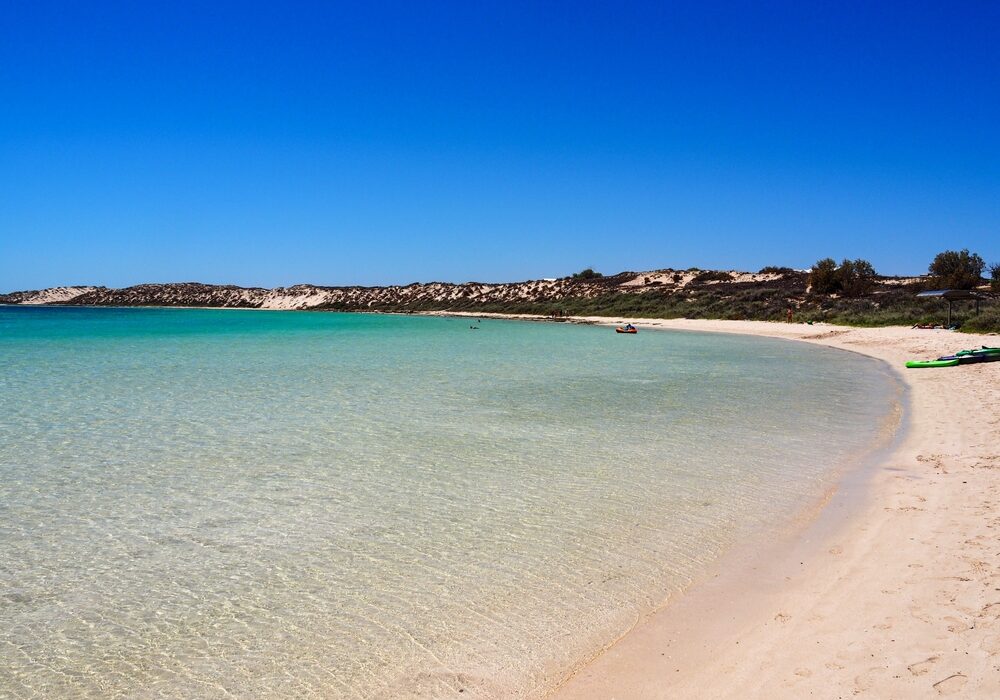
Janes Bay Campground
Janes Bay Campground is a remote coastal campsite suited to travellers who want space, simplicity and a proper off-grid stay.
There are no built facilities, just open camps, ocean views and plenty of wind. The journey in can be rough, so it’s best suited to well-prepared campers with capable vehicles and everything they need on board.
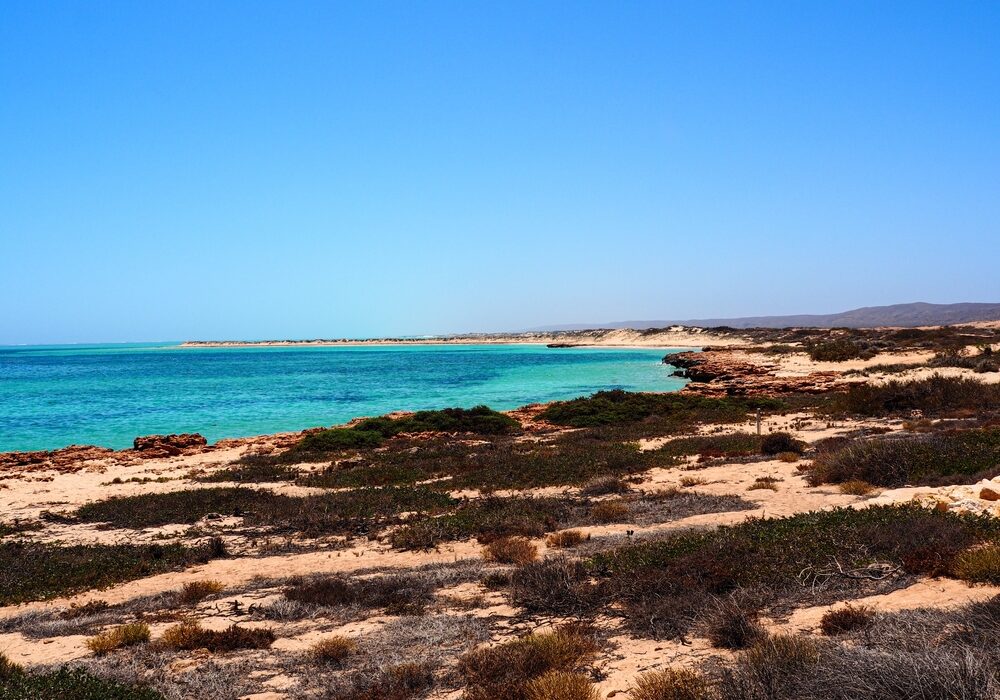
Kurrajong Campground (Cape Range)
Kurrajong Campground is a quieter Cape Range campground with easy dune access to the water, clean facilities and a laid-back feel.
It’s a solid choice for travellers who want a more peaceful base, simple amenities, and quick access to swimming and reef time.
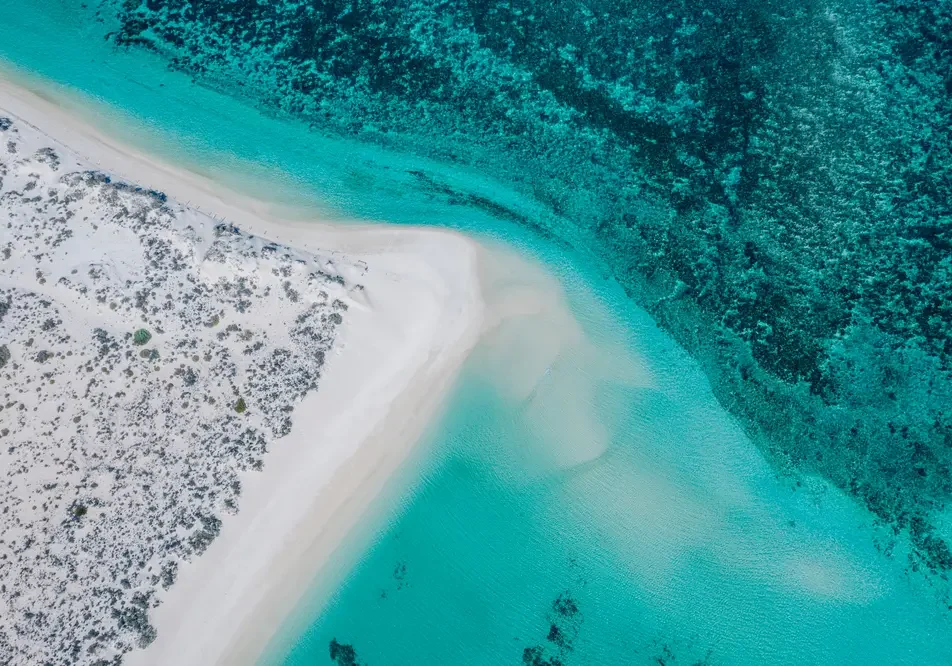
Mesa Camp
Mesa Campground is a popular coastal campground with spacious sites, beach access and easy launching for small boats.
Facilities are simple but well maintained, and some sites have shade. Generators are permitted during set hours.
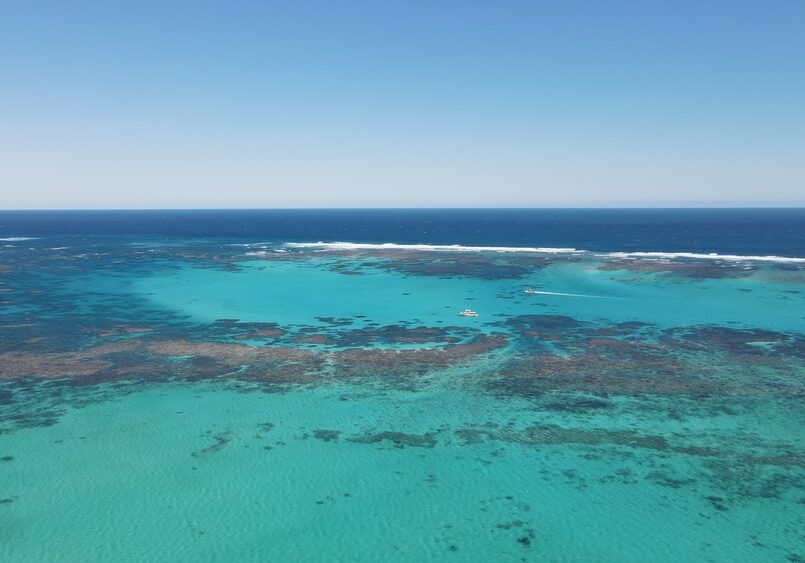
Neds Campground
Neds Campground is a small, peaceful campground tucked behind the dunes with a short walk to a quiet swimming beach and excellent sunset views.
Sites are spacious, some with tree cover, and facilities are simple but well maintained.
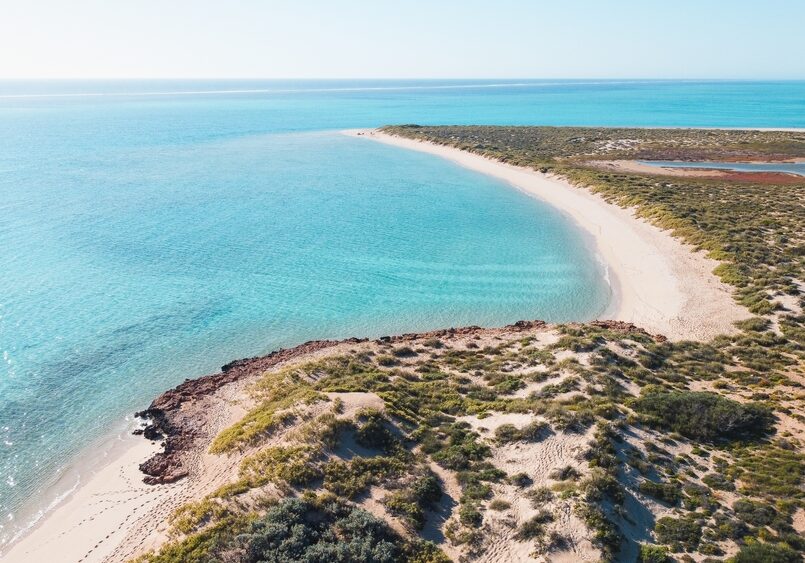
North Kurrajong & T-Bone Campground (Cape Range)
North Kurrajong Campground is a spacious coastal campground set just behind the dunes with easy access to reef and swimming areas.
Facilities are basic but well maintained, and the location is known for wildlife sightings, snorkelling and peaceful surroundings.
Best suited to self-sufficient travellers wanting nature, quiet and proximity to the reef rather than a serviced camping area.
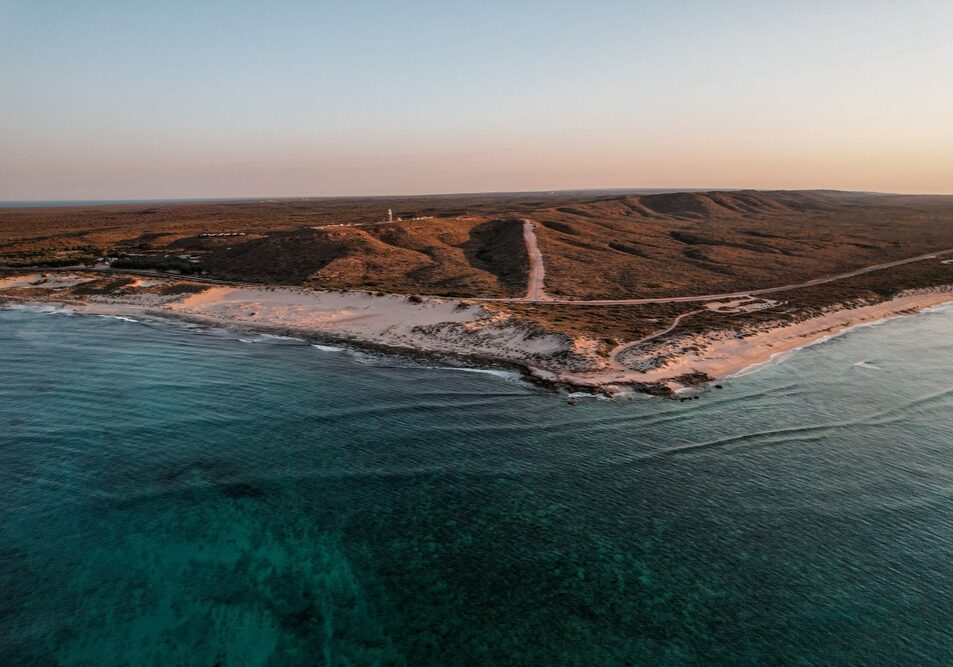
North Lefroy Campground
North Lefroy is a spacious beachfront campground with large private sites and excellent access to fishing and boating.
Facilities are basic and the access track can be rough and sandy, so a capable 4WD and lowered tyre pressures are essential.
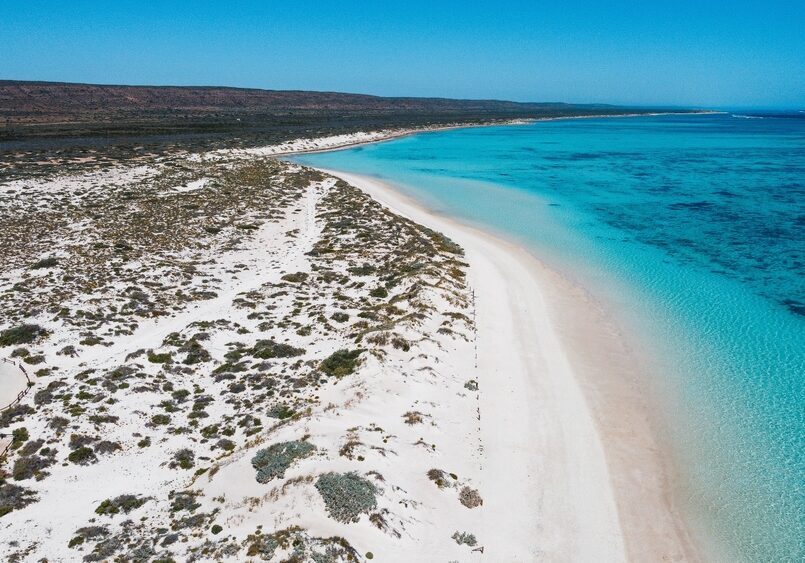
North Mandu Campground
North Mandu is a small, secluded campground with only a handful of sites tucked behind the dunes.
Facilities are simple but generally well maintained, and the location offers peaceful camping close to some of the best beaches and snorkelling areas in Cape Range.
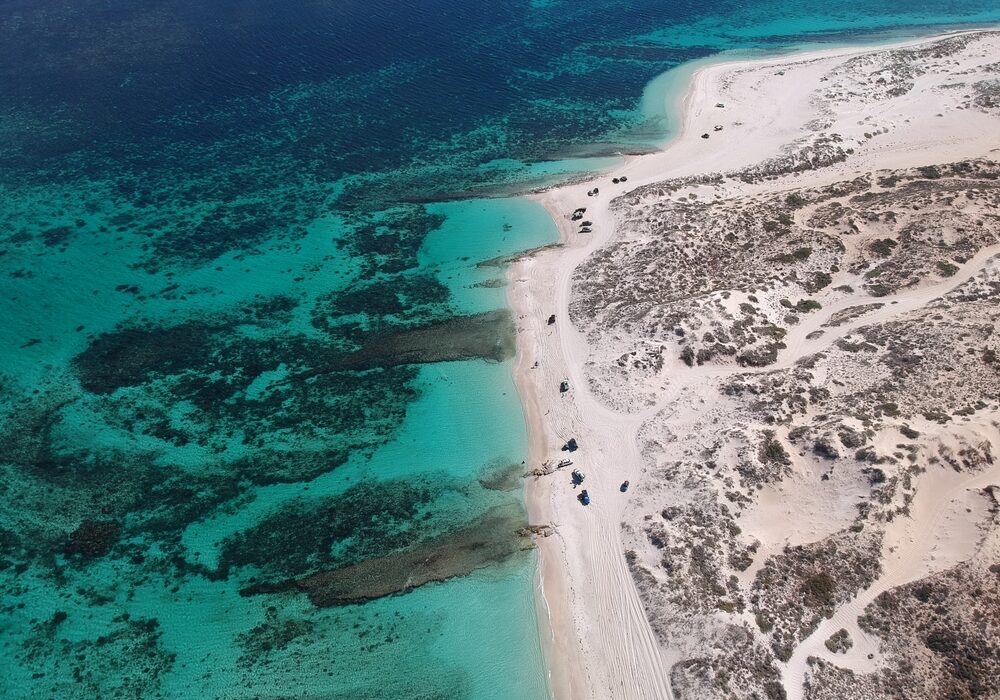
One K Campground
One K is a quiet and remote campground suited to self-sufficient travellers looking for space and solitude.
Facilities are basic and access requires some preparation, including lowering tyre pressures before arrival.

Osprey Bay Campsite
Osprey Bay Campsite is one of the standout campgrounds on the Ningaloo coast, with big, well-spaced sites right by the water, spotless long-drop toilets, and unreal snorkelling straight off the beach.
Point Billie Campground
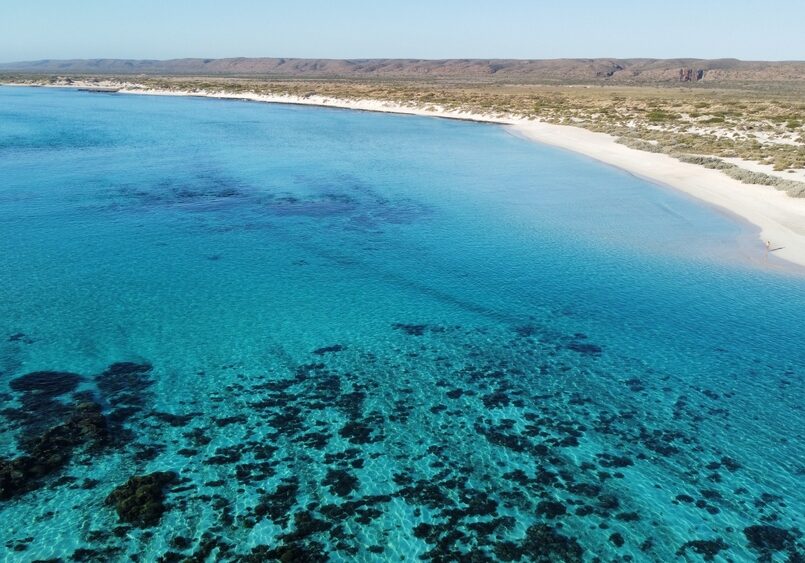
Point Billie Campground is a big, off-grid Ningaloo Station campground best suited to boaters and fishos, with huge sites, cracking sunsets, and plenty of wildlife. Expect wind, exposure and a rough corrugated 4WD approach.
Sal Salis Ningaloo Reef
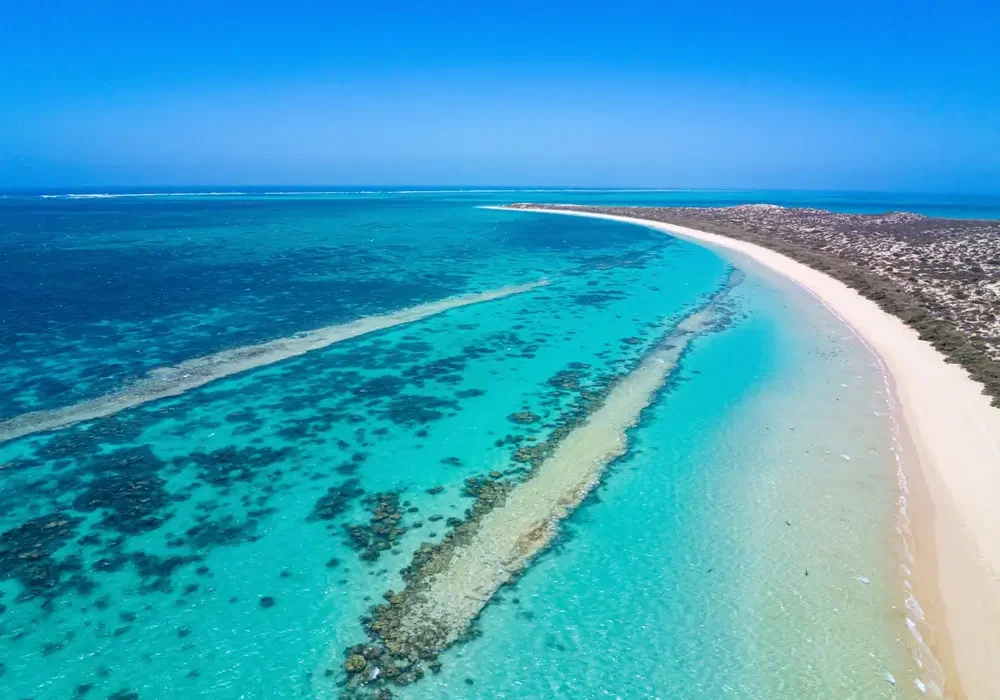
Sal Salis offers an exclusive, eco-luxury safari camp set within the dunes of Cape Range National Park, overlooking Ningaloo Reef.
With just 16 wilderness tents and one honeymoon tent, the experience blends barefoot comfort with guided nature-based activities and all-inclusive hospitality in a remote coastal setting.

South Lefroy Bay Campground
South Lefroy Bay Campground is a seriously special Ningaloo Station beach camp with clear, calm turquoise water and reef access straight off the sand.

Stans Camp (Overflow Camp)
A basic Ningaloo Station overflow campground sitting inland from the reef line. It’s open, exposed and self-contained only, often used when nearby beachfront camps are full.
The Ridge Campground
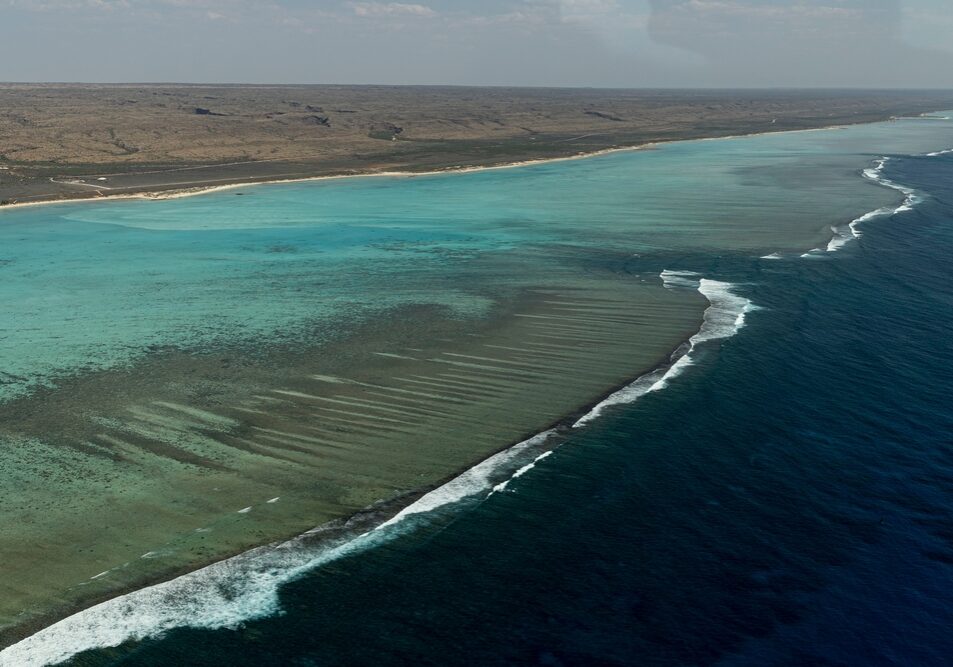
Remote bush campground south of Coral Bay with unpowered sites and basic facilities.
Tulki Beach Campground
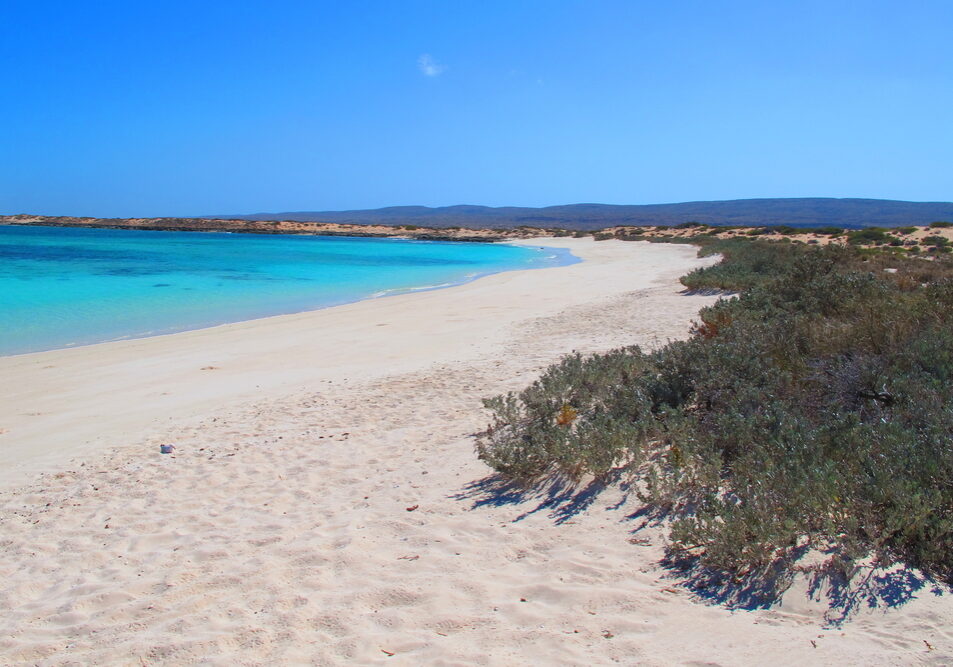
Tulki Beach Campground is a small, well-kept Cape Range National Park campground known for its peaceful feel and proximity to some of Ningaloo’s best snorkelling areas.
Not directly on the reef edge, but close enough to paddle or walk to the water with ease.
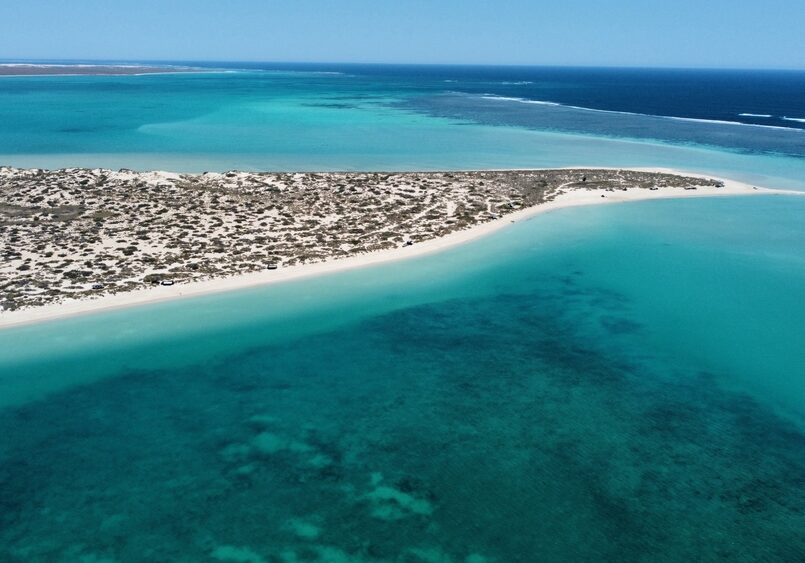
Winderabandi Point Campground
Winderabandi Point Campground is a remote beachfront campground on Ningaloo Station offering one of the most immersive reef and wildlife experiences along the coast.
Expect true off-grid camping, soft sand access and wide-open ocean views. It rewards preparation – and punishes complacency.
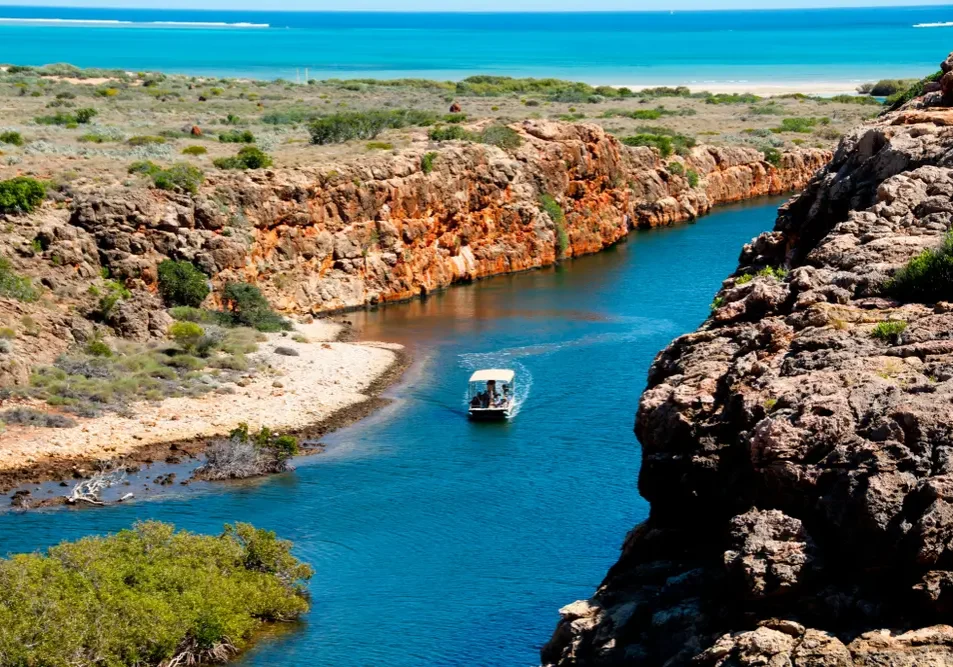
Yardie Creek Campground
Yardie Creek Campground is a small, beachside Cape Range National Park campground near the Yardie Creek gorge walks. People rate it highly for the location, sunsets, stargazing and the camp host vibe, but it’s basic and books out fast.
Bring water, expect long-drop toilets, and plan around the creek crossing if travelling south.